
Choosing the best Female Dog Nappies is not simply about finding the prettiest design or the lowest price. A reliable nappy should fit securely, absorb moisture well, and allow your dog to move, rest, and toilet comfortably. The right choice may differ for a small senior dog with incontinence and a young female during her season.
Practical details matter. Measure your dog’s waist while she is standing, especially around the narrow area before her hind legs. A nappy that slips during a walk will not protect carpets or bedding. A nappy that feels tight may leave red marks within a few hours. Soft edges, adjustable fasteners, and a breathable lining can make a noticeable difference.
Disposable and washable options each have strengths. Disposable nappies are convenient during travel, while reusable designs may reduce waste and suit regular home use. Absorbency also varies, so product descriptions should not be treated as perfect evidence. Some dogs need frequent changes, even when the nappy looks dry.
Comfort comes first.
This guide compares materials, fit, leak protection, cleaning demands, and real-world usability. It also considers veterinary guidance, because urinary leakage can sometimes indicate an underlying health problem. Nappies manage mess; they do not treat illness.
There is no universal winner. That is worth remembering. A product may perform well in one household yet fail for a dog with a broad waist, sensitive skin, or a busy lifestyle. Careful observation remains essential. Check the skin regularly, change the nappy promptly, and allow short nappy-free periods when safe.
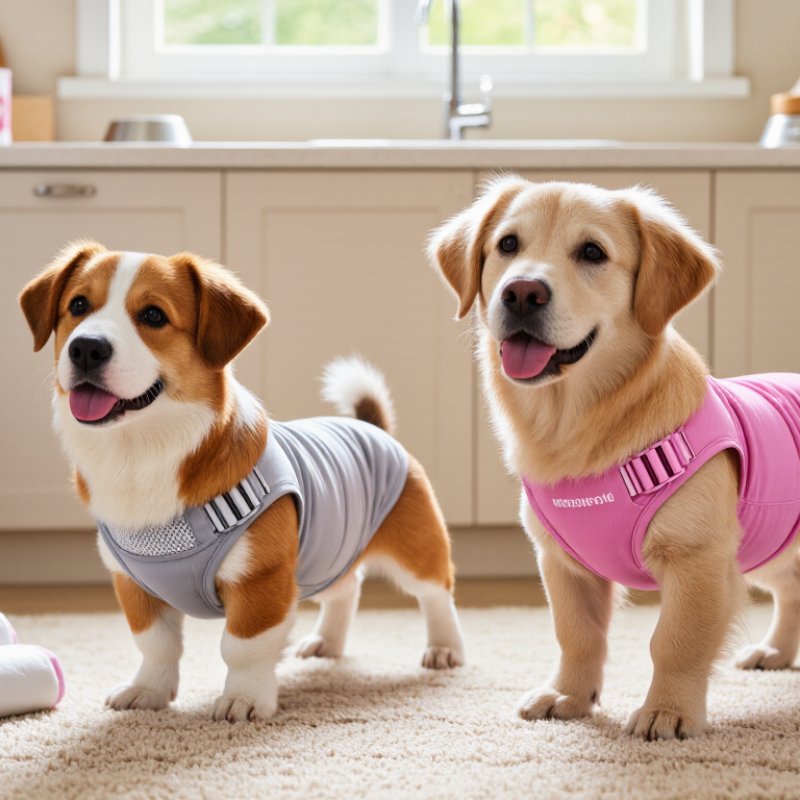
A female dog’s heat cycle commonly lasts two to four weeks, although timing varies. Merck Veterinary Manual describes changing reproductive signs across proestrus and estrus, so her nappy needs may change daily.
During the heavier discharge days, choose an absorbent nappy with a secure waist and a soft opening around the tail. It should stay in place without pressing her abdomen. You should fit two fingers beneath the waistband. Too tight causes rubbing. Too loose creates leaks.
Check it every few hours, and change it immediately after soiling. Remove it during toilet breaks, because a nappy should not replace normal urination. Gently clean the skin with lukewarm water, then dry the coat carefully. Moisture can cause redness, especially around the vulva and inner thighs. Washable nappies suit repeated use, while disposable options may help during travel or overnight checks. Neither type prevents mating.
As discharge becomes lighter, some dogs need less absorbency but still require protection indoors. Others become restless or repeatedly lick themselves. I would not rely on appearance alone. Track discharge, appetite, energy, and skin condition in a simple note. It is easy to misjudge the cycle.
Contact a veterinarian if bleeding seems unusually heavy, discharge smells foul, or your dog becomes weak, feverish, painful, or stops eating. Those signs may indicate illness rather than ordinary heat.

Urinary incontinence affects an estimated 5–20% of spayed female dogs. Rates vary by breed, age, body size, and study methods. New leaking should be discussed with a veterinarian, especially when thirst, pain, blood, or frequent urination appears.
The best female dog nappy depends on absorbency, fit, and changing frequency. For occasional drips, a slim washable or disposable design may work. Moderate leakage needs a wider absorbent core and secure leg openings. Overnight protection requires more capacity, but extra bulk can cause rubbing. Check the inner surface after several hours. It should feel damp, not saturated.
Absorbency labels are not always comparable. A practical test can reveal more. Add a measured amount of water to the nappy, wait ten minutes, then press a clean tissue against the inner lining. A dry tissue suggests better surface control, but this test cannot copy movement or urine flow.
Fit matters more than impressive numbers. The waist should stay secure without leaving red marks. Tail openings must prevent side leaks. Change the nappy regularly, even when it looks clean. Wet skin can become irritated quickly. A common mistake is choosing maximum absorbency and ignoring comfort. The dog may remove it, walk stiffly, or hide. Monitor skin daily, and reconsider the choice if redness develops.
The best female dog nappies begin with an accurate waist measurement, not a guessed weight range. Measure your dog while she stands naturally. Wrap a soft tape around her waist, just in front of the hind legs. Keep the tape flat, but do not pull it tight. Measure twice. Small errors matter.
A useful veterinary fit check allows one or two fingers beneath the waistband. One finger may indicate a secure fit; two fingers suit dogs needing more movement. More space can cause leaks. Less space may create rubbing, redness, or restricted breathing. Walk your dog for five minutes, then inspect the skin around her hips and vulva. The nappy should stay centred while she sits. It should not twist.
Choose absorbency according to the reason for use. Heat-related spotting may need less absorbency than urinary leakage. A Royal Veterinary College VetCompass study reported urinary incontinence in 3.14% of dogs, with female dogs especially represented. That finding supports careful monitoring, not automatic nappy use. Nappies are not a treatment for incontinence. Change them promptly when damp, and ask a veterinarian about repeated leaking, strong odour, pain, or skin changes. I still recheck the waist after washing or weight change. Fit advice is useful, but every dog’s shape is imperfectly measured.
Choose a nappy by measuring the dog's waist circumference immediately in front of the hind legs. After fastening, a veterinary-style fit check should allow one to two fingers between the nappy and the skin.
The waist bands shown are practical measurement examples, not universal manufacturer sizes. Always compare the measured waist with the specific product's sizing guide. One finger indicates a close fit; two fingers indicate the maximum comfortable clearance. Check for rubbing, slipping, or restricted movement.
What Are the Best Female Dog Nappies?
Choosing between disposable and washable nappies depends on your dog’s routine, skin sensitivity, and leakage risk. Disposable nappies are convenient during heat cycles, travel, or sudden incontinence. They absorb quickly and reduce laundry. However, trapped moisture can irritate the skin if the nappy stays on too long. Washable nappies create less household waste and may feel softer against the body. Their protection varies, especially when urine volume is high. A snug fit matters more than appearance. The opening should sit securely around the waist without pressing the vulva or tail.
Tips: Check the nappy every two to four hours. Change it immediately after heavy urination or soiling. Gently clean the skin with lukewarm water, then pat it completely dry. Never use scented products near sensitive areas. Washable nappies need thorough cleaning and complete drying before reuse. Keep at least three available, because one may be drying while another is being worn.
Watch for redness, swelling, strong odour, licking, or small sores. These signs can indicate irritation, infection, or an unsuitable fit. A veterinarian should assess ongoing leakage, since nappies manage mess but do not treat urinary disease. I once assumed a tighter nappy would prevent accidents, but it only increased rubbing. That was a useful reminder: more compression is not better protection. Some dogs also dislike sudden changes, so short supervised trials can reveal whether the fabric, fastening, or dampness is causing stress.
Leakage control deserves the highest weight in female dog nappies. I rank it at 40%, followed by comfort at 25%, safety at 20%, and cost per use at 15%.
This reflects daily practicality: a saturated nappy can wet bedding, irritate skin, and increase cleaning time. The 2023–2024 APPA National Pet Owners Survey recorded 86.9 million U.S. pet-owning households, highlighting the need for reliable, evidence-led hygiene products. However, APPA does not rank nappy performance, so this scoring model remains an editorial assessment.
The best leakage control usually comes from adjustable waistbands, close-fitting leg edges, and several absorbent layers. Test each nappy during a short indoor session first. A good fit should stay secure without leaving red marks. Comfort matters more than appearance. Soft, breathable fabric helps, especially during heat cycles or urinary leakage. Veterinary guidance commonly recommends frequent changes and daily skin checks, although the exact interval depends on flow, activity, and the dog’s health.
Safety comes before savings. Avoid nappies that restrict tail movement or trap moisture for long periods. Cost per use should include failed products, washing, and replacement bedding. For example, a cheaper nappy costing £0.70 per use may become expensive after two leaks. That calculation is imperfect. Dogs move differently, and laboratory absorbency rarely matches real homes. A small, honest trial often gives better evidence than a polished product claim.
Whether you’re a homeowner, builder, or designer, you’ll find that our elegant cabinets create a breathtaking space that evokes positive emotions and encourages lasting memories. We invite you to explore our website to learn more about who we are and how we can help you.
Woodinville | Bellevue | Seattle | Kirkland | California | Berkeley | Walnut Creek | Roseville, CA
© 2025 Acadia Craft. Powered by Integrity Marketing Serving Woodinville, Kirkland, Bellevue & The Greater Seattle Area
