Top Water Saving Shower Heads for Global Buyers
For global buyers, choosing a Water Saving Shower Head is not simply a matter of selecting the lowest flow rate. Real performance depends on water pressure, spray design, household habits, and regional plumbing conditions. A model that feels strong in London may feel weak in a rural supply system. That difference matters.
Peter Gleick, co-founder of the Pacific Institute and a respected water-policy expert, has said, “We must do more with less water.” His principle fits modern shower design. A reliable Water Saving Shower Head can reduce unnecessary flow while preserving a comfortable spray through aeration, pressure compensation, or carefully shaped nozzles. Buyers should examine tested flow rates, product materials, warranty terms, and recognized efficiency certifications. Marketing claims alone are not enough.
This guide compares leading options for international purchasing decisions. It considers daily comfort, installation simplicity, durability, and measurable water reduction. Some products perform impressively in laboratory conditions but disappoint when mineral deposits block their small nozzles. That weakness deserves attention. No shower head is perfect.
A practical test can reveal more than a polished product page. Time the shower, measure the collected water, and check whether the spray remains even at lower pressure. Families, hotels, and property managers may also calculate energy savings from reduced hot-water demand. Results will vary.
The strongest choice balances efficiency with real-world usability. It should save water without making every shower feel like a compromise. That balance is the focus of this review for buyers comparing products across markets.
Define Water-Saving Performance: EPA WaterSense Caps Flow at 2.0 GPM
For global buyers, water-saving performance starts with a clear measurement: flow rate. The EPA WaterSense showerhead specification caps certified products at 2.0 gallons per minute (GPM) at 80 psi, equal to about 7.6 liters per minute. That limit is 20% below the U.S. federal standard of 2.5 GPM. It is not merely a smaller outlet. Certification also considers spray force and coverage, because a weak shower may encourage longer use.
2.5 GPM
An eight-minute shower uses about 20 gallons.
2.0 GPM
An eight-minute shower uses 16 gallons.
15 liters
That saves roughly 15 liters per shower.
The difference becomes visible during daily testing. An eight-minute shower at 2.5 GPM uses about 20 gallons, while a 2.0 GPM model uses 16 gallons. That saves roughly 15 liters per shower. The U.S. Environmental Protection Agency reports that showering represents nearly 17% of residential indoor water use. For hotels, apartments, and large households, small flow reductions can become substantial annual savings. The U.S. Department of Energy also identifies water heating as a major household energy demand, so lower flow may reduce both water and heating consumption.
Still, the number can mislead. Pressure varies between buildings, and mineral deposits can change spray quality. A product tested at 80 psi may feel different in an older apartment. I would compare certified flow data, spray coverage, inlet size, and local testing rules before purchasing.
Good on paper. Not always perfect in use.
EPA WaterSense Specification for Showerheads, Version 2.0, and U.S. Department of Energy residential water-use data provide useful reference points.
Compare Showerhead Types Using EPA’s 20% Lower-Flow Benchmark
For global buyers, the EPA’s 20% lower-flow benchmark offers a practical comparison point. A standard showerhead may use 2.5 gallons per minute, while a qualifying efficient model uses no more than 2.0 gallons. That equals about 9.5 and 7.6 liters per minute. Check the unit carefully. US gallons differ from imperial gallons.
Fixed, handheld, dual, and rain-style showerheads can all meet lower-flow targets. Their spray patterns still feel different. In testing, a narrow spray often feels stronger than a wide rain pattern at the same flow rate. Handheld models can reduce wasted water during rinsing, especially when the user turns off the spray briefly. However, performance depends on household pressure, pipe condition, and the internal flow regulator. A low-flow label alone is not enough. Look for independently verified efficiency claims and clear test information.
Tips: Compare flow rates, not only spray settings. Check the number. If your home has weak pressure, avoid choosing solely by the lowest figure. A model rated near 2.0 gallons per minute may save water, yet feel disappointing in an older apartment. Measure shower duration with a timer and inspect the inlet filter regularly. Small mineral deposits can change spray quality. I once assumed a wider spray used more water, but the actual flow depended more on the regulator. That assumption needed correction.
Check Global Fit: GPM, L/min, Pressure, Threads, and Local Standards
Top Water Saving Shower Heads for Global Buyers
Flow rate is the first global compatibility check. In the United States, the federal showerhead limit is 2.5 gallons per minute (gpm), or about 9.5 L/min. The U.S. Environmental Protection Agency’s WaterSense specification limits certified showerheads to 2.0 gpm, equal to 7.6 L/min. The Water Research Foundation’s Residential End Uses of Water, Version 2, reports showering at roughly 11.6 gallons per person daily. Small flow reductions can therefore produce measurable household savings.
Pressure changes the user experience. A 7.5 L/min showerhead may perform well at 3 bar, yet feel weak near 1 bar. Check dynamic pressure, not only the pump label. Manufacturers should publish flow curves at several pressures. Real showers rarely match laboratory charts. That matters.
Thread standards create another common failure. North American products often use 1/2-inch NPT connections, while many European and Asian markets use G1/2 BSP threads. They may look similar but are not interchangeable. Confirm the shower arm, adaptor, and internal seal before ordering. Local requirements may reference EN 1112, ASME A112.18.1/CSA B125.1, or equivalent national standards. A CE mark alone does not confirm hydraulic performance. Also compare the test pressure, temperature, and measurement method. A cheaper model can become expensive after adaptors, returns, or poor pressure performance.
Top Water-Saving Shower Heads for Global Buyers
Global fit reference: flow rate, pressure, threads, and local efficiency benchmarks
Flow conversion: 1 US gpm = 3.785 L/min. The chart uses the same flow rates in both units.
Pressure: US federal showerhead flow limits are measured at 80 psi, approximately 5.5 bar. Actual performance varies with household pressure.
Threads: G1/2 BSP is widely used internationally, while 1/2-14 NPT is common in North America. Thread verification or an adapter may be required.
Australia: WELS shower ratings include 3-star products at up to 9.0 L/min, with higher ratings using lower flow thresholds.
Reference points: U.S. federal maximum 2.5 gpm (9.46 L/min), EPA WaterSense maximum 2.0 gpm (7.57 L/min), and Australian WELS 3-star threshold of 9.0 L/min. Confirm current local requirements before sale or installation.
Verify Savings: EPA Estimates 2,700 Gallons Saved per Household Yearly
Top Water Saving Shower Heads for Global Buyers
Verify Savings: EPA Estimates 2,700 Gallons Saved per Household Yearly
The U.S. Environmental Protection Agency estimates that a four-person household can save about 2,700 gallons yearly by replacing older showerheads with efficient certified models. This figure assumes regular showers and a reduced flow rate. It is an estimate, not a promise.
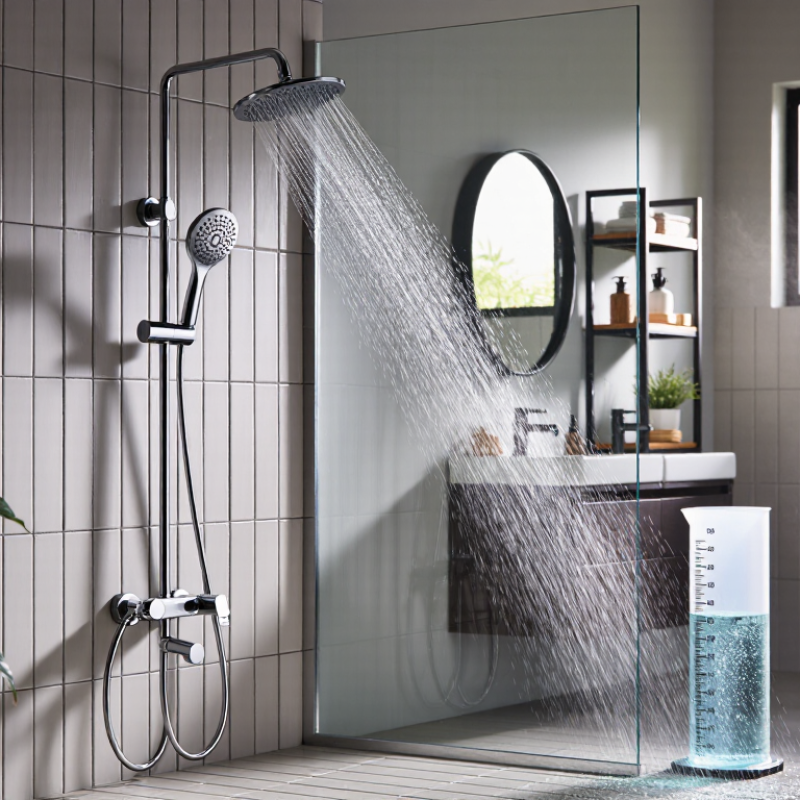
Check the flow rating before buying. Many efficient showerheads use no more than 2.0 gallons per minute, while older models may use 2.5 gallons or more. A simple bucket test can reveal actual performance. Run the shower for one minute and measure the water collected. Small differences become significant over hundreds of showers.
Performance also depends on water pressure, plumbing, and local standards. A low-flow design may feel comfortable in one apartment but weak in another. Look for adjustable spray settings, durable fittings, and clear certification details. Thread sizes can vary between countries, so an inexpensive adapter may be necessary. The projected saving may also fall in homes with short showers or limited use. That is worth admitting. Efficient hardware helps, but daily habits still control the final result.
Top Water Saving Shower Heads for Global Buyers - Verify Savings: EPA Estimates 2,700 Gallons Saved per Household Yearly