What Are the Best Windsor Style Chairs in 2026?
Windsor Style Chairs can look simple: a curved bow, slender spindles, and turned legs. Yet small differences in wood, joinery, and proportions affect comfort and durability. In 2026, choosing well means looking beyond a photograph. Check whether the chair feels stable, supports your posture, and suits the room where it will actually live.
The wider furniture market offers useful context, but not a Windsor-specific verdict. Grand View Research valued the global furniture market at $677.09 billion in 2023 and projected 5.3% annual growth from 2024 to 2030. That broad forecast does not tell buyers which Windsor chair is best. It does show why clear comparisons matter in a crowded market. Craft knowledge matters, too. Peter Galbert, a Windsor chairmaker and author of Chairmaker’s Notebook, teaches the importance of sound construction and carefully fitted joints. Put as a paraphrase, not a direct quotation: “Let sound geometry and well-fitted joinery guide the design.” It is a useful test, though no single rule settles every choice.
Some chairs prioritize heritage methods. Others trade traditional details for easier care or lower prices. This guide compares materials, construction, comfort, finish, and value, while noting where evidence is limited. Feel the seat edge. Inspect the leg joints. Ask what the maker can verify. A polished finish can hide flaws; a modest one can still protect good work. The best choice depends on your space, budget, and daily use—not a label alone.
How Windsor Chairs Are Defined and Recognized
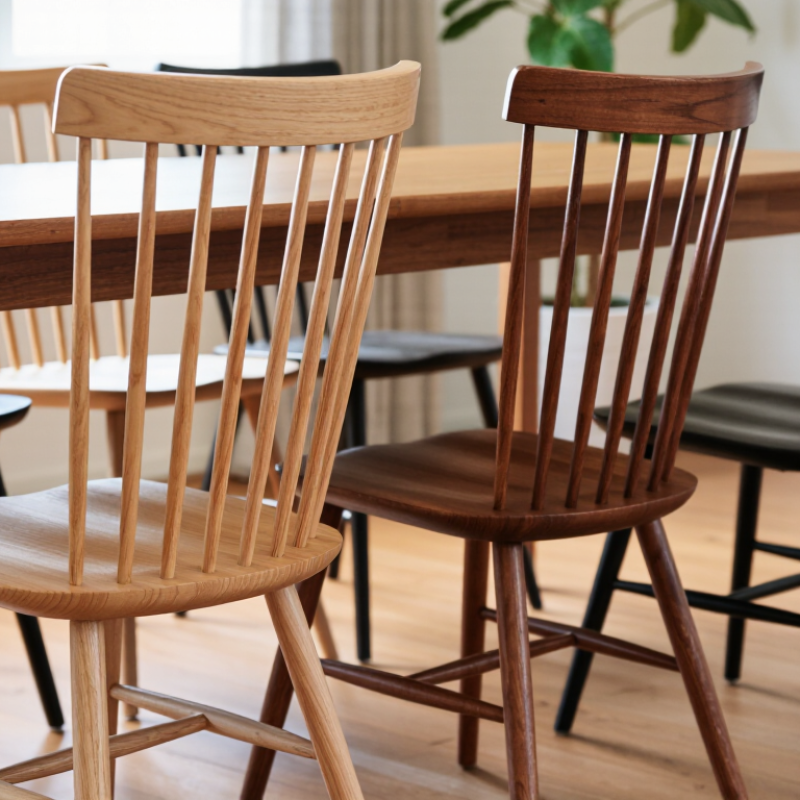
Windsor chairs are recognized by construction, not simply by their turned spindles. A typical example has a solid wooden seat, with legs and back spindles fitted directly into drilled holes. The back may form a bow, hoop, comb, or low-sack shape. These details matter: a chair can look similar yet use a different frame and joinery. Check the underside, where the leg sockets and seat construction are often easier to inspect. Look closely.
The wider furniture market offers context, but not proof of Windsor-specific demand. Grand View Research estimated the global furniture market at US$556.3 billion in 2023 and projected a 5.4% compound annual growth rate from 2024 to 2030. That broad figure cannot tell buyers which Windsor form is best; it does show how much furniture choice spans changing tastes and uses. A Windsor chair’s light appearance can also hide substantial variation in seat depth, back angle, and wood.
Tips: Sit in the chair before judging its shape. Check that the seat supports you, the spindles feel secure, and the legs do not rock on a level floor. Compare joinery, not just finish. I sometimes find the silhouette persuasive before I notice an awkward seat angle; appearance is not the whole story.
Major Windsor Chair Styles and Their Differences
Windsor chairs are defined less by one silhouette than by their construction. Turned spindles fit into a solid seat, while legs and stretchers support the frame. This gives many versions a light outline and a reassuringly firm feel. Details vary.
Bow-back chairs have a curved rail that sweeps over the back spindles. Their open shape often feels visually simple. Hoop-back chairs use a deeper, rounded rail, creating a more enclosed look. Comb-back styles add a horizontal crest rail with upright spindles beneath it, much like teeth on a comb. Some versions include arms; others keep the profile narrow. The labels are less tidy than guides suggest, and makers across different periods sometimes blur these boundaries.
Low-back chairs can suit compact dining spaces because their frames rise less above the seat. Writing-arm versions add a small surface beside the sitter, but they need more room around a table. Before choosing, check how the spindles meet the seat and whether the legs feel steady on a hard floor. Sit in the chair, too. A shaped wooden seat may feel supportive to one person and unforgiving to another. Small detail, big difference.
How to Evaluate Windsor Chairs in 2026
When evaluating Windsor chairs in 2026, start with the frame, not the finish. Check how the legs meet the seat and whether the joints look tight and even. A chair should feel steady on a hard floor, without rocking or creaking. Look closely. Turn it over; secure spindles and clean joinery tell you more than glossy photographs.
Sit in it for several minutes. The bow-shaped back should support you without pressing sharply against your shoulders, and the seat should feel comfortable at your usual table height. Check the armrests, if present, against the table apron. Small mismatches can make daily use awkward. Ask what wood is used and how the surface is protected; a smooth finish should not hide cracks or rough edges.
Compare the chair’s dimensions with your space, then consider how it may age. Solid construction and replaceable parts can matter more than a perfect-looking finish. Still, no checklist can settle personal taste. I might favor visible tool marks, while another buyer sees them as flaws. That uncertainty is part of evaluating furniture, not a reason to skip careful inspection.
Best Windsor Chairs for Different Uses in 2026
Windsor chairs suit different rooms when their proportions match the job. For everyday dining, choose a stable chair with a broad, shaped seat and a back that supports you without forcing an upright pose. Check the seat height against your table; a few centimeters can change how comfortable a long meal feels. Spindle backs look light, but closely spaced spindles may feel busy in a small room. Sit in one before buying, if possible.
For a desk or reading corner, look for arms only if they slide beneath the table or fit beside your favorite chair. A low-backed Windsor can feel open and flexible, though it may not support your shoulders during a long work session. For occasional use, that compromise might be fine. For daily use, test the chair for at least several minutes and notice pressure under your thighs.
Porches and kitchens call for different checks. Traditional wooden Windsor chairs are generally better indoors unless their finish and materials are rated for outdoor exposure. Sunlight and damp air can wear a finish unevenly. Not ideal. In a busy kitchen, inspect joints and the underside of the seat, where wear can be easy to miss. Hand-shaped details add character, but small variations are not automatically proof of better construction; examine the chair’s stability and finish in person.
Typical seat-height ranges are shown in inches. Choose a seat based on the height of your table or counter; actual fit can vary with the furniture and the person.
Materials, Construction, and Long-Term Care
For a Windsor-style chair, judge the wood and joints before admiring the silhouette. A hard maple or oak frame can handle daily use, while a steam-bent bow should feel smooth and continuous, without visible cracks. Check that the spindles sit firmly in the seat and that the legs do not wobble. Small gaps matter. They can widen with seasonal movement.
Wood needs room to move. The USDA Forest Products Laboratory’s Wood Handbook (FPL-GTR-282, 2021) puts the fiber-saturation point near 30% moisture content for many species; below that point, drying causes wood to shrink. Keep a chair away from radiators and direct sun, and wipe spills promptly with a soft, slightly damp cloth. Avoid soaking joints or using harsh cleaners. For a practical durability reference, ANSI/BIFMA X5.4-2020 outlines load, impact, and repeated-use tests for public and lounge seating; passing such tests does not guarantee every chair suits every home. Recheck loose joints occasionally, but do not overtighten screws or force a spindle back into place. Repairs can be imperfect. A visible, stable fix may serve longer than a rushed replacement.