
Global buyers choosing a Chinese furniture supplier need more than an attractive catalogue. They need clear specifications, consistent quality, and communication that holds up after a sample is approved. Sofa Feet may look like a small component, yet they affect a sofa’s stability, height, finish, and overall appearance.
A steel leg with a clean weld can suit a modern frame, while a tapered wooden foot may better fit a traditional design. Small details matter. Thread size, mounting plates, load capacity, surface coating, and floor contact all deserve attention before an order is placed. Manufacturers may offer metal, wood, plastic, or mixed-material options, but availability alone does not prove a product suits your project. Ask for drawings, material details, finish samples, and inspection procedures. Then compare those records with the physical sample.
A sample can look excellent and still differ from bulk production. That possibility is easy to overlook when schedules are tight. Buyers should also discuss packaging, labeling, lead times, and how defects are handled. Export experience can help, but it should be verified through specific questions and supporting documents. No checklist catches everything. A confident sourcing decision comes from checking the details, asking follow-up questions, and recording agreed specifications. This guide introduces China’s Sofa Feet manufacturers and practical points global buyers can use to assess product fit, supplier reliability, and production readiness.
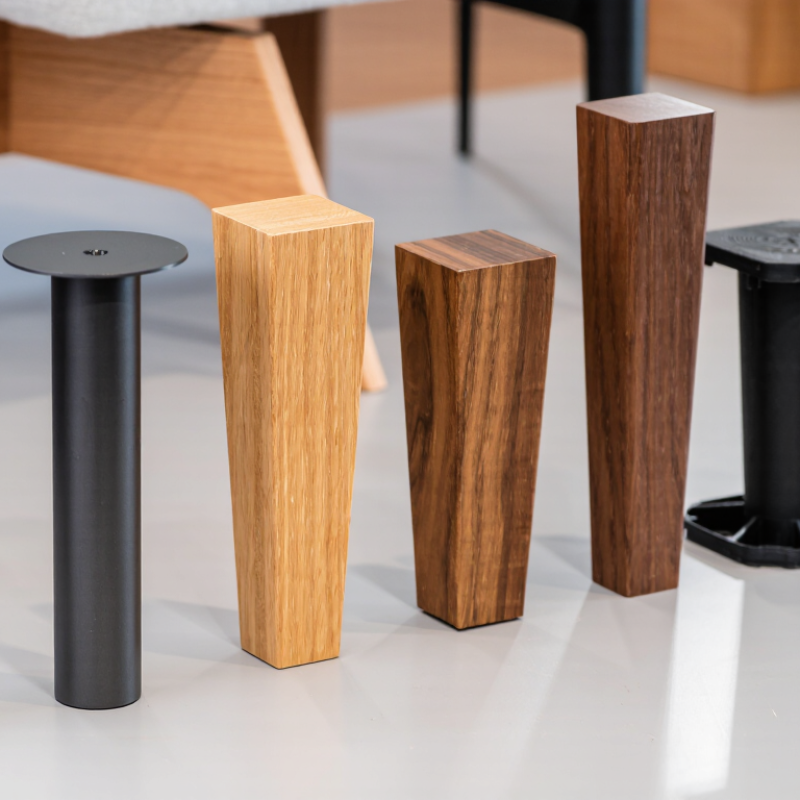
Sofa feet are the supports fitted beneath a sofa’s frame. They carry the furniture’s weight and create space between the upholstery and floor. Their height affects seat position, cleaning access, and the sofa’s overall proportions. A few millimeters can change how a low sofa feels in a small room. Small parts matter.
Foot design also influences stability and visual character. Tapered wooden feet can make a bulky sofa appear lighter, while broad feet often suit heavier frames. Metal or wood may be chosen for appearance, but the connection and load rating deserve equal attention. Finish matters too: rough edges can scratch floors, and glossy surfaces may show dust. There is no universally ideal shape; a neat-looking foot can make vacuuming awkward.
Tips: Check the stated load capacity and mounting method before ordering. Confirm dimensions, thread size, and floor clearance with the furniture maker. For samples, inspect the joint and finish under ordinary room light. A small mismatch is easy to overlook.
Sofa feet are the supports fitted beneath a sofa frame. They help transfer the furniture’s weight to the floor, provide clearance for cleaning, and contribute to the sofa’s height, stability, and appearance. The specifications below are general reference ranges; actual dimensions and performance depend on the design and construction.
| Sofa Foot Type | Common Material | Indicative Height | Design and Functional Role | Buyer Considerations |
|---|---|---|---|---|
| Tapered leg | Solid wood or metal | 100–180 mm | Narrows toward the floor, creating a light, elevated look often used in modern and mid-century-inspired furniture. | Check attachment strength, leg angle, finish consistency, and compatibility with the sofa’s frame. |
| Straight block foot | Wood, metal, or reinforced plastic | 50–120 mm | Provides a simple, compact support that suits contemporary, transitional, and space-conscious designs. | Confirm the footprint and fastening method; a wider base can help distribute weight over a larger contact area. |
| Turned wood foot | Solid wood | 80–150 mm | Decorative turned profiles add a traditional or classic furniture detail while raising the frame above the floor. | Review wood species, moisture control, coating, and the joint or insert used for installation. |
| Metal sled foot | Steel or aluminum | 100–160 mm | A continuous or curved support creates a clean architectural profile and spreads contact along a longer base. | Check weld quality, corrosion protection, floor-contact pads, and whether the design suits the sofa frame. |
| Angled metal leg | Steel or aluminum | 100–180 mm | Outward-angled legs can give a sofa a more open appearance and increase the distance between floor contact points. | Verify mounting-plate orientation, leg position, floor protection, and stability with the intended frame layout. |
| Low-profile support | Plastic, wood, or metal | 20–60 mm | Keeps the sofa close to the floor for a low-slung look and can reduce visible space beneath the frame. | Consider cleaning access, floor clearance, ventilation, and the effect on overall seat height. |
| Adjustable foot | Metal stem with plastic or metal base | Typically adjustable by a few millimetres to several centimetres | Allows small height corrections on uneven floors and can help limit rocking after installation. | Check the adjustment range, thread size, locking method, and load rating documented for the finished assembly. |
| Hidden or recessed foot | Plastic, metal, or wood | 20–80 mm | Sits partly beneath the frame to create a floating visual effect while providing concealed support. | Confirm frame recess dimensions, access for installation, floor clearance, and serviceability. |
| Protective glide or cap | Felt, rubber, nylon, or plastic | Usually 2–15 mm | Fits at the floor-contact point to help reduce scratching, noise, or friction during movement. | Select a material suited to the floor surface and confirm that the cap fits the foot securely. |
Specification note: Height ranges are indicative, not universal standards. Before ordering, confirm dimensions, material and finish, mounting details, floor-contact design, and tested load capacity for the complete sofa configuration.

© 2025 Acadia Craft. Powered by Integrity Marketing Serving Woodinville, Kirkland, Bellevue & The Greater Seattle Area