
How to Choose the Best Activated Carbon Filter Sheet?

Choosing the best activated carbon filter sheet requires more than comparing prices or carbon weight. The right material depends on the target contaminants, airflow, humidity, temperature, and available installation space. A sheet designed for odors may perform poorly against certain industrial vapors. That difference matters.

Start by identifying the application clearly. Household ventilation, laboratory cabinets, vehicle cabins, and air purifiers require different designs. Check the carbon type, carbon loading, sheet thickness, pore structure, and supporting fiber. Coconut-shell carbon often suits smaller molecules, while coal-based carbon may offer broader adsorption performance. However, these are general tendencies, not guaranteed results. Always review verified test data.

Look closely at pressure drop and service life. A dense sheet may capture vapors effectively, yet restrict airflow too much. A lightweight sheet may fit easily but become saturated quickly. Humidity can also reduce adsorption capacity. A prefilter may help by catching dust before it blocks the carbon layer. Small details matter. Ask suppliers for airflow test conditions, adsorption results, material safety information, and batch consistency records. Independent laboratory evidence is more reliable than impressive marketing language.

There is no universal “best” activated carbon filter sheet. The most suitable choice balances contaminant control, airflow, durability, safety, and total replacement cost. A careful buyer should compare performance under realistic conditions, not only laboratory numbers. Even then, results may vary. Regular monitoring and timely replacement remain essential.
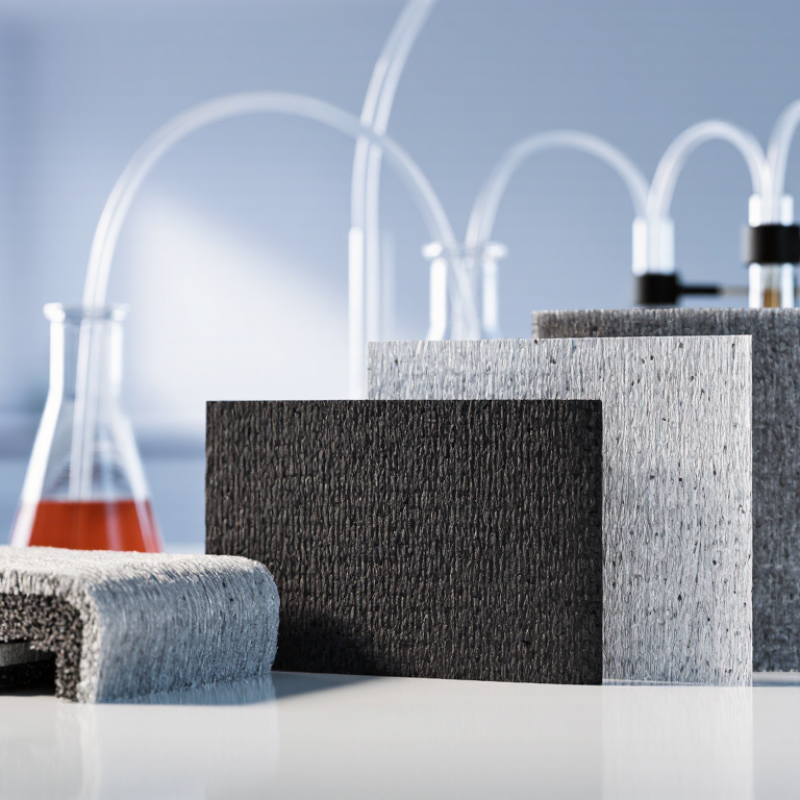
How to Choose the Best Activated Carbon Filter Sheet?

Understanding Activated Carbon Filter Sheet Basics

An activated carbon filter sheet is a porous material designed to adsorb gases, odors, and certain vapors. It does not work like a typical dust filter. Its carbon pores capture molecules as air passes across the surface. The sheet may also contain a fiber layer and binder, which hold the carbon in place.

Start with the air problem. Cooking odors, solvent smells, and general indoor odors require different carbon capacities. Check the carbon loading, sheet thickness, and airflow rating before choosing one. More carbon can improve adsorption, but it may also increase pressure drop. A thick sheet is not automatically better. Air needs enough contact time with the carbon.

Humidity deserves attention. Moist air can occupy adsorption sites and reduce performance for some gases. A prefilter can capture dust and protect the carbon layer. During practical evaluation, measure airflow, pressure drop, and odor reduction under realistic conditions. Test the sheet in the actual housing, not only on a laboratory bench. That detail is often missed. Review independent test data and replacement guidance. I have found that a filter can appear effective at first, yet lose capacity quickly when the contaminant load is high. Carbon quality matters, but system design matters just as much.

Identifying the Contaminants You Need to Remove

Choosing an activated carbon filter sheet starts with the contaminant, not the sheet’s thickness. Carbon works well against chlorine, many odor compounds, and selected volatile organic compounds. It is not a universal barrier. Dissolved salts, microbes, and many heavy metals may pass through standard carbon. That distinction matters in a kitchen, workshop, or air-handling cabinet.

Read the water or air test before selecting the media. A chlorine smell points toward adsorption, while cloudy water suggests a separate particle filter. For solvent vapors, check the compound, concentration, airflow, and required contact time. A thin sheet may reduce a mild odor, but it can saturate quickly in a busy room. Humidity also competes for adsorption space. Performance drops quietly. That is easy to miss.

Ask for independent test data showing capacity, pressure drop, and target contaminants. Look for conditions resembling your application, including temperature and flow rate. In practice, inspect the sheet after a trial period and compare inlet and outlet readings. Smell alone is unreliable. I have seen a filter seem effective for days, then decline sharply. Replacing it by calendar date may be convenient, but not always accurate. A simple log of operating hours, odor changes, and test results supports a safer choice. If the contaminant is unknown, laboratory identification should come before filter selection.

How to Choose the Best Activated Carbon Filter Sheet? - Identifying the Contaminants You Need to Remove

Contaminant or Target Typical Sources Activated Carbon Sheet Selection Expected Suitability Important Limitations Recommended Verification
Free chlorine Municipal drinking-water disinfection High-surface-area granular or powdered activated carbon bonded into a sheet; adequate contact time is important. Good under suitable flow conditions Capacity decreases as the carbon becomes exhausted. Chloramine is more difficult to reduce than free chlorine. Measure influent and effluent chlorine with a validated water test method.
Chloramine Water utilities using chloraminated disinfectant Catalytic or specially treated carbon sheet designed and tested for chloramine reduction. Application-dependent Standard carbon may provide limited reduction; performance depends strongly on pH, temperature, flow rate, and contact time. Request independent chloramine reduction data at the intended flow rate.
Volatile organic compounds (VOCs) Paints, solvents, fuels, adhesives, cleaning products, and industrial emissions Microporous activated carbon with sufficient carbon loading; thicker or multilayer sheets generally provide greater capacity. Good for many VOCs Adsorption varies by compound. High humidity can reduce capacity for some VOCs, and breakthrough can occur without obvious warning. Use compound-specific breakthrough testing or laboratory air-quality analysis.
Odors and smoke compounds Cooking, tobacco smoke, waste areas, pets, and general indoor air pollution A sheet with high carbon mass per unit area and low-pressure-drop airflow design. Good for many odor-causing gases Carbon does not remove all odor sources, especially particles, moisture, or odors continuously generated at high concentrations. Conduct odor-panel testing or measure the relevant gas compounds before and after filtration.
Hydrogen sulfide and sulfur odors Sewage, wastewater, anaerobic processes, and some industrial environments Impregnated carbon formulated for sulfur gases; select a sheet with documented hydrogen sulfide capacity. Good when specifically treated Untreated carbon may have limited capacity. Performance is affected by humidity, concentration, and gas residence time. Use gas detection and supplier test data for the actual concentration range.
Ozone Ozone-generating equipment, water treatment, and some industrial processes Carbon media validated for ozone decomposition, often using specially treated or catalytic carbon. Application-dependent Ozone can oxidize carbon and shorten service life. High concentrations require engineered safety controls. Monitor ozone concentration upstream and downstream with an appropriate analyzer.
Mercury and other heavy metals Industrial emissions, contaminated water, mining, and manufacturing processes Use chemically impregnated carbon specifically formulated for the target metal and the relevant air or water chemistry. Specialized only Ordinary activated carbon is not a universal heavy-metal filter. Dissolved metals may require ion exchange, precipitation, or membrane treatment. Perform laboratory analysis for the specific metal, concentration, and chemical form.
PFAS and other persistent chemicals Industrial sites, firefighting-foam residues, consumer products, and contaminated water Select a high-quality, high-capacity carbon sheet with independent testing for the specific PFAS compounds. Compound- and water-specific Short-chain PFAS are generally more difficult to adsorb than long-chain PFAS. Organic matter and competing contaminants can reduce capacity. Require validated third-party testing at the intended empty-bed contact time and flow rate.
Bacteria, viruses, and other microorganisms Contaminated water or air Activated carbon alone is not an appropriate primary disinfection barrier; combine with a validated microbiological treatment process when required. Not reliable alone Carbon can become a surface for microbial growth if poorly maintained. It does not reliably disinfect water or air. Use microbiological testing and a validated UV, membrane, thermal, or chemical disinfection process as appropriate.
Dust, pollen, and particulate matter Outdoor air, combustion, construction, and household activity Use a separate mechanical particle layer, such as a pleated fine-particle filter, with the carbon sheet for gas-phase control. Limited by itself Activated carbon is designed mainly for gases and vapors, not efficient particle capture. Check particle-removal efficiency, pressure drop, and filter-class performance of the mechanical layer.
Selection note: Filter-sheet performance depends on carbon type, carbon loading, sheet thickness, airflow or water-flow rate, humidity, temperature, contaminant concentration, and contact time. Choose a sheet using test data for the exact contaminant and operating conditions rather than surface area alone.

Comparing Carbon Types, Materials, and Filtration Performance

Choosing an activated carbon filter sheet starts with the contaminant, not the product label. Coconut-shell carbon usually provides many micropores, which suit smaller molecules and some solvent vapors. Coal-based carbon often offers a wider pore structure for mixed organic compounds. Wood-based carbon has larger pores and can perform well with bulky molecules. Impregnated carbon may target specific gases, but its treatment can increase cost and reduce general-purpose flexibility. No carbon type wins every application.

The sheet material also affects performance. Cellulose feels economical and can offer good airflow, while polyester supports strength and moisture resistance. Foam or felt may hold more carbon, but thicker sheets can create higher pressure loss. Check carbon loading, thickness, binder content, and dust release. Small details matter.

Filtration performance should be verified under realistic conditions. Compare adsorption capacity, airflow, pressure drop, humidity tolerance, and breakthrough time. A high iodine number looks impressive, but it does not predict every vapor. Surface area alone can mislead. Ask for test methods, gas concentration, temperature, and face velocity. In practical evaluation, a thinner sheet with stable airflow may outperform a heavier sheet that blocks quickly. Fit and sealing matter too. A perfect media layer cannot fix edge leakage. This is where selection becomes less certain, and retesting remains necessary.

Checking Sheet Size, Thickness, Airflow, and Compatibility

Choosing an activated carbon filter sheet starts with accurate measurements. Record the required length, width, and thickness in millimeters. A sheet that is slightly oversized may buckle inside the housing. One that is too small can leave visible air gaps.

Thickness affects contact time and pressure drop. Thicker media usually holds more carbon, but it can restrict airflow. Check the supplier’s airflow data under realistic conditions, not only the highest advertised rate. Compare pressure drop at your fan’s working speed. Quiet airflow matters. A loud fan may signal excessive resistance.

Compatibility requires more than fitting the frame. Confirm the sheet’s carbon type and target pollutants. Some media perform better against odors, while others suit specific vapors. Humid environments can reduce adsorption performance. Check the recommended temperature and humidity range. Also inspect the backing material, seal, and support grid. Loose edges can allow untreated air to bypass the carbon.

Ask for test conditions, service-life estimates, and replacement guidance. These figures are useful only when they match your application. A laboratory result may not reflect a dusty workshop or a small room. I have seen filter selections fail because airflow was measured without the installed grille. That detail is easy to miss. Recheck the dimensions after installation, because compression can change the effective airflow path.

Evaluating Service Life, Safety, Cost, and Maintenance Needs

Choosing the best activated carbon filter sheet requires more than comparing adsorption ratings. Service life depends on contaminant concentration, humidity, airflow, and contact time. A sheet used near cooking odors may last longer than one treating solvent-like industrial vapors. Check breakthrough data under conditions similar to your equipment. Laboratory figures can mislead when real air is warmer or wetter.

Safety should guide the selection. Request material specifications, pressure-drop data, and independent test reports. Confirm that the binder and supporting layers suit the operating temperature. A low-cost sheet may release particles, restrict airflow, or degrade quickly. It may also create extra replacement work. I have seen maintenance plans fail because they ignored dust loading. That mistake is easy to repeat.

Tips:

Measure pressure drop before installation. Record airflow, humidity, and replacement dates. Inspect the sheet for darkening, swelling, odors, or damage. Do not rely on color alone. Use a calibrated monitor when possible, and follow the equipment maker’s limits. Compare total cost, not purchase price. Include labor, disposal, downtime, and replacement frequency. A thicker sheet is not automatically better. Sometimes it raises resistance without extending useful life. This is where careful testing matters. Perfect predictions are impossible, and field results may challenge the original specification.