How to Buy Custom Cabinets Online?
Buying Custom Cabinets Online can make a kitchen or bathroom renovation more flexible, but it requires careful decisions before you place an order. You can compare door styles, finishes, storage options, and prices from home. Yet a polished website does not guarantee that a cabinet will fit your room. Measure each wall, corner, doorway, and appliance opening, then check those numbers against the supplier’s measuring guide. Keep the measurements in one clear document. Small gaps show.
A reliable buying process also means looking beyond the product photos. Review cabinet dimensions, construction materials, finish details, delivery terms, warranty coverage, and return policies. Ask how the company handles damaged pieces or missing hardware, and save written answers with your quote. If you are choosing between plywood and particleboard, compare the specifications rather than relying on a label alone. A designer or installer can help catch conflicts around plumbing, trim, or uneven floors. That detail matters.
Before ordering, confirm the layout, quantities, and finish samples; colors can look different on a screen. Request an itemized quote so you can see what shipping and accessories cost. Even a careful plan can miss something, especially in an older home where walls are rarely perfect. Pause and check again. This guide explains how to evaluate suppliers, compare cabinet options, verify measurements, and place an order with fewer surprises.
Define Your Project Scope, Budget, and Required Cabinet Types
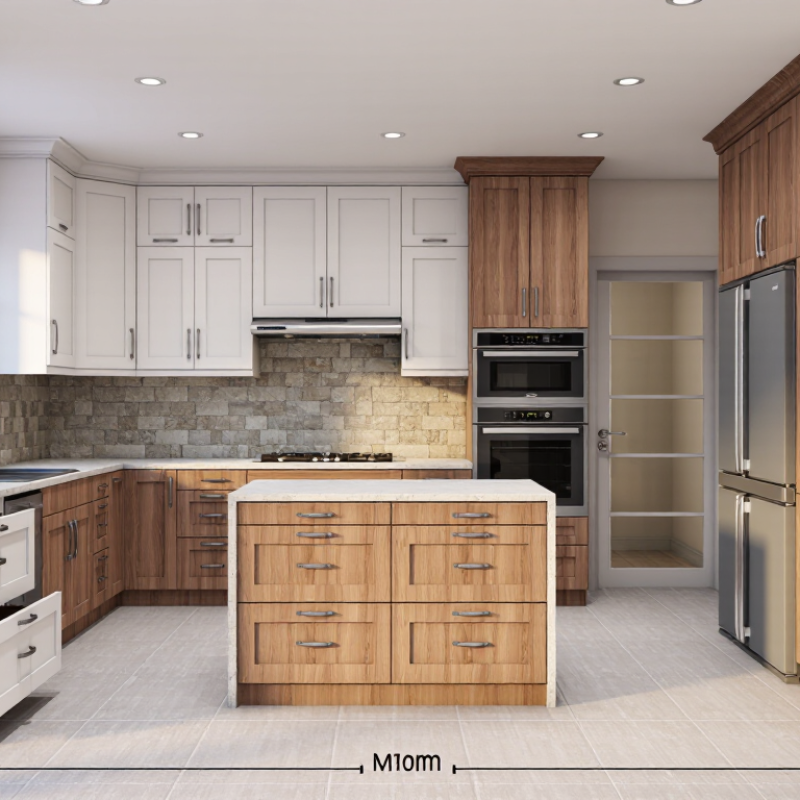
Before ordering custom cabinets online, define what the project must solve. List each room, cabinet location, and essential function. For example, note whether a kitchen needs a tall pantry, deep drawer storage, or space for a built-in appliance. Measure wall lengths, ceiling height, doorways, and nearby windows. Record obstacles such as pipes or uneven floors, and confirm measurements before submitting them. A missed corner can affect the entire layout.
Tips: Set a firm cabinet budget, then leave room for delivery, hardware, and installation. Separate must-haves from upgrades. Measure twice. Keep photos and a simple sketch with your notes.
Choose cabinet types to match daily use, not just appearance. Base cabinets support counters and store heavier items; wall cabinets keep frequently used items within reach. Tall cabinets can add pantry storage, but they may overwhelm a narrow room. Decide on door style, finish, and interior fittings after confirming dimensions and function. Compare written specifications, including materials, box construction, drawer details, and finish care. Online images can make colors look warmer or cooler than they are, so request a sample when available. Plans are rarely perfect; review them with the installer, and revise details that seem awkward before approving the order.
How to Buy Custom Cabinets Online: Plan Your Project Budget
Illustrative budget allocation for a $15,000 cabinet project
Use this sample as a starting point, not as a price quote or industry benchmark. Before ordering, measure your space, list the cabinet types you need—such as base, wall, and tall cabinets—and compare itemized quotes. Adjust each allocation to fit your project scope and keep a contingency for unexpected costs.
Measure the Room Against the NKBA’s 42-Inch Single-Cook Work-Aisle Guideline
Before ordering custom cabinets online, measure the work aisle in the room, not just the cabinet run. The NKBA recommends a 42-inch-wide work aisle for one cook. This is a planning guideline, not a universal code requirement.
Measure between the opposing countertop fronts, then check the narrowest point. A doorway, trim, or projecting handle can quietly reduce the usable space. Small details matter.
Use a tape measure at counter height, and repeat the measurement near the floor if walls or cabinets are uneven. Then mark the proposed cabinet fronts with painter’s tape. Walk through the space and imagine opening the oven, dishwasher, and drawers.
Can someone pass while the dishwasher is open? A 42-inch aisle may meet the guideline on paper but feel cramped during daily use. That deserves a second look.
Record measurements in inches, and include finished wall surfaces and planned handles in your notes. If the layout is tight or irregular, ask a qualified kitchen designer or installer to review the plan before you place an order.
I would not rely on one quick reading; measuring twice is less exciting, but often cheaper than correcting a cabinet order.
Check Layouts Against the Standard 24-Inch Base-Cabinet Depth
When buying custom cabinets online, check every layout against the standard 24-inch base-cabinet depth. This measurement usually describes the cabinet box, not the finished distance from the wall to the counter’s front edge. Doors, drawer fronts, and countertop overhang can add noticeable depth.
Small detail. Big impact.
Measure from the finished wall to the edge of the planned countertop, then compare that figure with the online drawing. A countertop often projects beyond the cabinet, while handles may extend farther into a walkway. Check nearby appliances, too. An oven door or dishwasher needs room to open without blocking a passage. If the design includes an island, mark its footprint on the floor with tape. It is an easy way to spot a cramped route before ordering.
Confirm how the seller defines depth, since measurement conventions can vary. Ask for the cabinet-box depth and the finished depth, including doors and countertop overhang. Compare those numbers with your room measurements and appliance specifications. Sink bases, end panels, and filler pieces may differ from a standard cabinet. One measurement I might overlook on a screen can become a daily annoyance in a kitchen. Recheck the drawing before approving it, especially where walls are uneven or utilities sit close to the cabinets.
Compare Materials and Verify KCMA Certification to ANSI/KCMA A161.1
When comparing custom cabinets online, look beyond attractive door samples. Ask what each box, shelf, and drawer is made from. Plywood, particleboard, and solid wood differ in weight, cost, and response to moisture; construction and finish matter too. Request details on panel thickness, joinery, edge sealing, and the finish applied to exposed surfaces. A close-up photo of a cabinet corner can reveal more than a polished room image. Still, photos cannot prove durability.
Check whether the cabinet line is certified by the Kitchen Cabinet Manufacturers Association (KCMA) to ANSI/KCMA A161.1. This performance standard includes tests for cabinet strength, drawer and door operation, and finish resistance. Ask the seller for documentation showing which product line is covered, then verify current certification status through KCMA’s available records. A vague “tested to industry standards” claim is not the same as certification to this named standard. Look for the certification mark on product information, too. Small details matter. Certification gives useful evidence, but it does not guarantee a perfect fit, careful installation, or identical performance in every home. It is easy to focus on the label and overlook the cabinet’s actual materials. Don’t skip that comparison.
Approve Shop Drawings, Delivery Terms, and Damage Policies Before Ordering
How to Buy Custom Cabinets Online?
Approve Shop Drawings, Delivery Terms, and Damage Policies Before Ordering
Custom cabinets can fit an awkward corner or a sloped ceiling, but accurate measurements matter. Before paying, review the shop drawings line by line. Check cabinet widths, door swings, drawer locations, finished sides, and appliance clearances. Compare the drawing with your room measurements and the approved layout. A small error near a refrigerator can create a costly installation problem. Ask for revised drawings if anything looks unclear. Do not rely on a quick verbal confirmation.
Delivery terms deserve the same attention. Confirm whether the price includes curbside delivery, inside placement, or a scheduled appointment. Ask how the shipment will be packed and whether someone must be present to inspect it. Cabinet boxes are heavy. A narrow driveway or several stairs may change what delivery is practical. Get these details in writing before ordering.
Tips: Photograph the unopened shipment and each cabinet as you unpack. Note crushed corners, torn wrapping, or missing pieces on the delivery receipt, then report them within the stated time window. Keep packaging until you finish inspection. I once assumed a clean outer box meant everything inside was fine; it did not. Check carefully.