
How to Choose the Best Garage Storage Racks in 2026?

Choosing the right Garage Storage Racks in 2026 requires more than comparing prices and shelf counts. A rack may look sturdy online, yet fail to fit your garage walls, vehicle clearance, or storage habits. The best choice begins with accurate measurements, realistic load estimates, and a clear plan for daily access.

Modern systems offer steel frames, adjustable beams, wall-mounted designs, rolling units, and modular accessories. Each option serves a different garage. Heavy tools need stable shelves and verified weight ratings. Seasonal boxes may need taller bays and easier reach. A glossy finish is useful, but it does not replace strong joints, balanced loading, and reliable anchoring. Check the manufacturer’s specifications carefully. User reviews can reveal loose fasteners, confusing instructions, or difficult assembly.

Small details matter. Measure the distance above your car hood. Note where doors, windows, outlets, and floor drains open. Leave enough space to walk safely around stored items. A narrow aisle can become frustrating quickly. Very tall racks also deserve caution, especially when boxes are lifted overhead. Secure installation should follow the product instructions and your building’s requirements.

Budget is only one part of value. A cheaper rack may bend, rust, or require replacement sooner. Still, expensive does not always mean better. That is an easy assumption to challenge. This guide compares capacity, materials, adjustability, installation, safety features, and long-term usability. It also examines common buying mistakes, because even careful shoppers can overlook one critical measurement. The goal is practical: help you choose a dependable storage system that keeps tools visible, floors clearer, and future changes manageable.
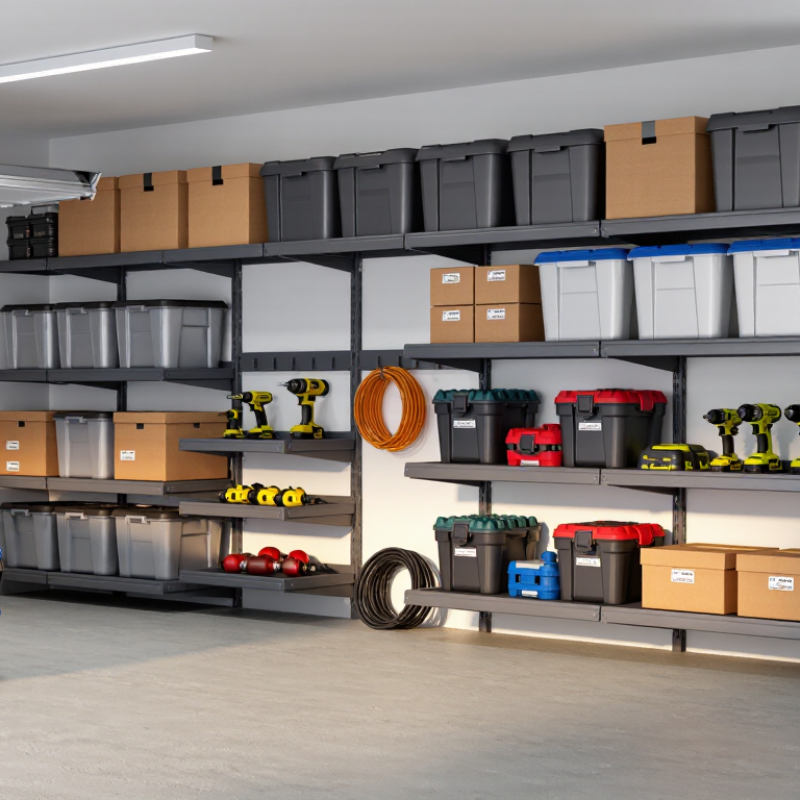
How to Choose the Best Garage Storage Racks in 2026?

Understanding Garage Storage Rack Types and Their Main Uses

How to Choose the Best Garage Storage Racks in 2026?

Garage storage racks are no longer one-size-fits-all equipment. Mordor Intelligence estimates the global garage storage market at about $1.3 billion in 2024, with annual growth near 4–5%. That growth reflects a practical problem: garages now store tools, bicycles, seasonal boxes, and household equipment.

Wall-mounted racks suit narrow garages because they keep the floor clear. Freestanding steel racks offer flexible shelving for paint cans, power tools, and plastic bins.

Overhead racks work well for lightweight seasonal items, such as camping gear. They need careful ceiling checks, though. A crowded ceiling can become inconvenient quickly.

I have found that rack choice should follow the object, not the other way around. Heavy tool cases need deep, load-rated shelves. Long timber or sports equipment fits better on vertical rails or wall hooks. Corner racks can rescue unused space, but their triangular shelves often waste storage area.

The U.S. National Association of Home Builders has consistently ranked garage storage among highly valued home features, showing that organization affects perceived home usefulness.

Still, published load ratings can be misunderstood. They usually assume even weight distribution, not one dense toolbox at the edge.

Tips:

Measure floor depth, ceiling height, and door movement first. Leave a clear walking path. Check stud locations before mounting wall racks. Store heavy items below waist level. Recheck loose bolts after several weeks.

My own mistake was choosing maximum capacity instead of daily access; the rack held everything, but reaching one drill became annoying.

Assessing Your Garage Space, Storage Needs, and Available Budget

Measure the garage before buying a rack. Record wall width, ceiling height, door tracks, outlets, and vehicle clearance. A 30-centimetre error can make an expensive system useless. Keep at least 75 centimetres beside car doors when possible. Check concrete cracks and moisture first. Damp walls can damage stored tools and weaken unsuitable anchors.

Your storage needs should guide the rack, not the other way around.

Group seasonal equipment, hand tools, sports gear, and household supplies separately. Weigh the heaviest boxes and place them low. The National Association of Home Builders’ 2024 buyer-preference research identifies garage storage as a valued feature, showing that usable capacity affects perceived home functionality. Yet more shelves do not automatically create better organization. I have seen crowded garages become less practical after adding oversized units.

Set a firm budget before comparing materials and load ratings. The U.S. Bureau of Labor Statistics’ 2023 Consumer Expenditure Survey found housing consumed 33.3% of average household spending, leaving limited room for discretionary upgrades. Choose structural safety over decorative finishes. Steel frames usually suit heavy equipment, while lighter systems may fit seasonal containers. The Freedonia Group’s 2024 storage-products analysis also highlights continued demand for space-efficient household organization.

Measure twice. Buy once, perhaps. Leave 10–15% spare capacity for future needs, because a completely full rack becomes difficult to inspect and reorganize.

Comparing Rack Materials, Weight Limits, Sizes, and Adjustability

How to Choose the Best Garage Storage Racks in 2026?

Material, weight limits, size, and adjustability should guide your decision. Steel racks usually handle heavier tools and storage bins. Aluminum is lighter, but it may flex under concentrated loads. Wire shelving improves airflow and visibility, although small items need containers. Check the stated weight limit for each shelf, not only the entire unit. That distinction matters. A shelf holding paint cans experiences more stress than one holding folded tarps.

Measure your garage before shopping. Record ceiling height, wall width, floor clearance, and the swing of nearby doors. A deep rack can block a car door or create an awkward walking path. Adjustable shelves help when storage needs change. Choose systems with several height positions and secure locking points. I once measured the wall but forgot the garage-door track. That mistake reduced usable space and required a redesign. Load weight should also be distributed evenly. Heavy items belong on lower levels, while lighter boxes can occupy higher shelves.

Tips: Keep a small safety margin below the maximum rating. Anchor tall racks to suitable wall structures. Inspect bolts after installation. Use a tape measure twice. Leave room for handles, lids, and future purchases. If the rack feels unstable when lightly loaded, stop and correct it before adding weight. Check the instructions carefully, since installation requirements can vary by wall material and rack design.

How to Choose the Best Garage Storage Racks in 2026? — Comparing Rack Materials, Weight Limits, Sizes, and Adjustability
Rack Material / Construction Typical Load per Shelf Common Rack Sizes (W × D × H) Adjustability Durability and Environment Best Use Important Buying Check
Powder-Coated Carbon Steel 350–1,000 lb
(159–454 kg)
36–72 × 18–24 × 60–84 in
(91–183 × 46–61 × 152–213 cm)
Usually adjustable in 1–3 in increments; many units offer boltless beam adjustment. High strength and impact resistance. Powder coating helps resist ordinary garage moisture, but exposed scratches can rust. Confirm whether the stated capacity applies per shelf or to the entire unit, and whether the load must be evenly distributed.
Galvanized Steel 250–800 lb
(113–363 kg)
36–72 × 18–24 × 60–84 in
(91–183 × 46–61 × 152–213 cm)
Commonly adjustable in 1–2 in increments, depending on the upright and beam system. Better corrosion resistance than untreated steel, especially in damp or semi-open garages. The zinc coating can wear at cut edges. Garages with humidity, seasonal temperature changes, or limited climate control. Look for full galvanization or corrosion-resistant treatment on uprights, connectors, and fasteners—not only on shelf panels.
Steel Wire Shelving 200–600 lb
(91–272 kg)
24–60 × 14–24 × 36–72 in
(61–152 × 36–61 × 91–183 cm)
Often adjustable in 1 in increments; shelves may be repositioned without tools on compatible post systems. Good airflow and visibility. Wire decks reduce dust buildup but may allow small items to fall through. Cleaning products, labeled containers, paint cans, and items that benefit from ventilation. Check the wire spacing, shelf deflection rating, and whether shelf liners are included or required.
Aluminum 100–400 lb
(45–181 kg)
24–60 × 16–24 × 48–72 in
(61–152 × 41–61 × 122–183 cm)
Usually adjustable in 1–2 in increments, although lightweight designs may have fewer locking positions. Lightweight and naturally corrosion-resistant. It is generally less rigid than steel under heavy or concentrated loads. Mobile storage, humid areas, and situations where the rack must be moved frequently. Check the frame profile, joint strength, and caster rating if the rack is intended to roll while loaded.
Heavy-Duty Plastic or Resin 100–350 lb
(45–159 kg)
24–48 × 18–24 × 36–72 in
(61–122 × 46–61 × 91–183 cm)
Typically adjustable in fixed positions, often with snap-together or interlocking shelves. Resists rust, chemicals, and moisture. Plastic can become brittle under prolonged ultraviolet exposure or extreme cold. Light-to-medium storage, gardening supplies, sports gear, and damp utility areas. Review the temperature range, shelf sag guidance, and whether the load rating changes when shelves are closely spaced.
Steel Frame with Wood-Composite Shelves 250–800 lb
(113–363 kg)
36–72 × 18–24 × 60–84 in
(91–183 × 46–61 × 152–213 cm)
Usually adjustable in 1.5–3 in increments; shelf boards may be removable or reversible. Provides a flat, solid deck. Composite boards can swell or lose strength if exposed to leaks or persistent humidity. Boxes, small appliances, tool cases, and irregularly shaped items that need a solid surface. Choose moisture-resistant decking and keep the rack elevated from standing water or wet concrete.
Capacity note: Load ratings are typical market ranges for properly assembled racks on a level floor. Actual capacity depends on shelf spacing, frame geometry, fasteners, floor condition, anchoring, and how evenly the weight is distributed. Always follow the manufacturer’s published rating, keep heavy items on lower shelves, and anchor tall racks where required.

Checking Safety Features, Installation Methods, and Long-Term Durability

Choosing the best garage storage rack in 2026 starts with safety, not appearance. In my own garage, a heavily loaded shelf once shifted after uneven weight distribution. It taught me a simple lesson: capacity labels need careful reading. Check the maximum load per shelf, total frame capacity, locking pins, and anti-tip protection. Steel uprights should feel rigid, not springy. Leave enough clearance for doors, vehicles, and walking paths.

Installation methods also affect long-term safety. Freestanding racks suit renters and smooth floors, but they need wide, stable feet. Wall-mounted systems save space and should attach to solid studs or approved masonry anchors. Measure twice. Drill once. Keep heavy containers on lower levels to reduce the center of gravity. Follow the supplied instructions, even when the assembly appears obvious. Small shortcuts can create large problems.

Durability depends on more than thick metal. Look for corrosion-resistant finishes, reinforced joints, replaceable hardware, and shelves that resist bending. In damp garages, inspect corners and fasteners every few months. Dust can hide early rust. I used to assume a quiet rack was a safe rack, but loose bolts may stay silent until the frame moves. That assumption was wrong. Keep a simple load record, especially after adding tools or seasonal storage. No rack remains reliable without occasional checking.

How to Choose the Best Garage Storage Racks in 2026?

Comparison of common garage rack configurations using representative published load ranges for each rack type. Always verify the exact rating, anchoring requirements, and installation instructions for the selected product.

How to read this chart: Heavy-duty steel shelving generally offers the highest per-shelf capacity, while wall-mounted and ceiling-mounted systems depend strongly on the wall or ceiling structure and the quality of the anchors. For long-term durability, prioritize corrosion-resistant finishes, reinforced joints, evenly distributed loads, and secure anchoring.

Selecting the Best Garage Storage Rack for Your 2026 Requirements

Selecting the best garage storage rack in 2026 starts with your actual routine, not a glossy specification sheet.

Measure wall height, floor depth, doorway width, and clearance around your vehicle. A rack that looks spacious online may leave only six inches beside a parked car. That mistake is expensive and annoying.

Think about what you store: paint supplies, seasonal boxes, hand tools, or heavy containers.

Separate dense loads from awkward shapes before choosing shelf spacing. Adjustable levels matter when a tall storage bin replaces a small toolbox.

Check the stated load capacity for each shelf, not only the rack’s total rating. Use a margin because real garages rarely hold perfectly balanced boxes.

Steel frames suit heavier equipment, while coated surfaces help in damp or dusty rooms. Inspect joints, braces, feet, and wall connections carefully.

Follow the installation instructions and anchor the unit when required by its design or local requirements. Keep frequently used items between waist and shoulder height. Store lighter boxes above them. This reduces reaching, bending, and accidental drops.

My own selection process improved after one poor choice. I bought deep shelves and later discovered that rear items disappeared behind front bins.

Now I prefer moderate depth, labeled containers, and a clear aisle.

Still, labels can fail when storage changes. Leave unused capacity for future needs. Recheck loose hardware after loading.

A rack is not suitable if it fits the wall but disrupts daily movement. Before buying, sketch the garage and mark doors, outlets, lighting, and water-prone corners.