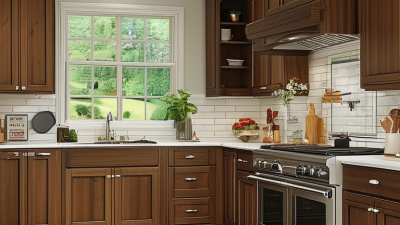
Buying Cabinets Online has become a practical option for contractors, retailers, and property developers seeking global suppliers. Digital platforms provide access to wider product ranges, factory information, and competitive quotations. A buyer in Canada can compare oak shaker doors from Vietnam, flat-pack units from Poland, and custom storage systems from China within one afternoon. That level of reach saves time. It can also create confusion.
Real sourcing experience shows that online images are only an opening step. Screen colors may differ from actual finishes. A “solid wood” description may refer to doors, not the full cabinet box. Reliable suppliers should provide material specifications, drawings, hardware details, packaging photos, and clear production timelines. Buyers should request samples before placing large orders. Small details matter, including hinge quality, edge sealing, moisture resistance, and carton strength. A polished website is not proof of manufacturing capability.
Professional procurement also requires careful landed-cost analysis. Freight, duties, insurance, installation, and potential replacement parts can change the final price significantly. Buyers should confirm applicable import requirements and product safety standards in the destination market. Factory audits, video inspections, trade references, and documented quality checks can improve confidence. Still, no sourcing method removes every risk. Supplier promises may sound precise, yet delays happen. Measurements can be misunderstood. That is why written specifications and approved samples are essential. Cabinets Online can support efficient global sourcing, but thoughtful verification remains the real advantage. Convenience is not certainty.

Online cabinet sourcing has changed how global buyers enter the furniture trade. A procurement team can compare construction methods, materials, prices, and production capacity without visiting every factory. More importantly, online sourcing creates a documented trail. Product drawings, moisture requirements, packaging plans, and inspection records can be reviewed by different team members.
In practice, reliable sourcing begins with detailed specifications. A cabinet listing may show attractive doors, but it may not reveal panel density, edge-banding quality, hardware tolerance, or formaldehyde testing. Buyers should request material samples and current factory photographs. Video inspections can also show cutting equipment, assembly areas, and carton storage. These details help connect online information with physical production.
Global trade adds another layer of responsibility. Buyers must confirm dimensions, shipping terms, import documents, safety requirements, and local product rules before placing an order. A small mismatch can cause costly delays. One sample may also perform well while a larger batch varies slightly. That risk is easy to underestimate. I would not treat an online profile as proof of capability. It is only a starting point. Clear communication, independent inspection, and staged payments offer stronger protection. Still, online sourcing is not perfect. Time-zone gaps can slow decisions, and translated specifications may create confusion. Careful questions matter.

Buying cabinets online makes international selection more structured, especially when projects involve different suppliers, currencies, and shipping distances. The U.S. Census Bureau reported that e-commerce represented 16.1% of total retail sales in 2024. This wider digital habit also influences professional sourcing. Online platforms let buyers compare cabinet dimensions, materials, finishes, hardware, certifications, and minimum order quantities on one screen.
McKinsey’s B2B Pulse Survey 2024 found that business buyers use ten or more interaction channels during purchasing journeys. A reliable cabinet platform should support that behavior with searchable specifications, downloadable CAD files, live video meetings, and documented quotations. Buyers can filter for plywood thickness, moisture resistance, hinge cycles, packaging standards, and delivery terms before requesting samples. A sample door beside a tape measure often reveals more than polished photography. Small details matter.
Digital records also improve accountability. Product pages can preserve revision dates, inspection images, test documents, and communication histories. The International Trade Centre’s Trade Map demonstrates how accessible trade data supports better comparison of international suppliers and markets. Still, online selection is not risk-free. Screens distort color, and stated lead times may remain optimistic. I would verify every critical measurement twice, request a physical sample, and confirm Incoterms in writing. Convenience helps, but it can also encourage rushed decisions.
Why Buy Cabinets Online for Global Sourcing?
Buying cabinets online across borders gives procurement teams a wider, clearer market view. Digital catalogs allow buyers to compare cabinet dimensions, board materials, finishes, hardware, minimum order quantities, and quotations within minutes. UNCTAD’s e-commerce data estimates global online sales reached about $26.7 trillion in 2019 across 43 economies. The figure shows why digital sourcing is no longer a minor purchasing channel.
It also improves sourcing transparency. Buyers can request production photos, test reports, packaging details, and sample approvals before placing larger orders. A supplier’s response time matters. So does the quality of its technical drawings. The World Bank’s Logistics Performance Index 2023 highlights major differences in customs, tracking, and delivery reliability between markets. Online purchasing helps teams compare these risks before shipment. Still, a polished webpage proves little.
Cabinet buyers should verify moisture resistance, formaldehyde emissions, load capacity, and installation tolerances through independent documents. The International Trade Centre’s Trade Map can help check market flows and supplier-country patterns. Freight costs may also change the final price sharply. One compact cabinet can become expensive after volumetric shipping, insurance, duties, and local handling. Online sourcing is powerful, but imperfect. A video call cannot replace physical inspection. Request samples, record agreed specifications, and leave room for production variation.
Online purchasing adoption in selected European markets, 2023
High online-purchasing adoption indicates a strong digital customer base for cross-border cabinet sourcing. Online procurement can help buyers compare suppliers, specifications, prices, certifications, and delivery options across markets before placing an order. The figures represent general online purchasing behavior, not cabinet sales.
Source: Eurostat, ICT usage in households and by individuals, 2023; share of individuals aged 16–74 who purchased goods or services online during the previous 12 months.
Why Buy Cabinets Online for Global Sourcing?
Choosing an online cabinet supplier can widen your sourcing options, but attractive photos prove very little. Assess product specifications, material grades, panel thickness, edge treatment, and hardware compatibility. Ask whether dimensions follow your drawings or a supplier’s standard sizes. Small differences can disrupt an entire installation.
Request physical samples before discussing large orders. Check the finish under bright light, open each hinge repeatedly, and inspect drawer movement. Samples reveal flaws. Ask for test reports, factory quality procedures, and production photographs with visible dates. A credible supplier should explain moisture resistance, packaging methods, replacement policies, and inspection points without avoiding details. Verify business records, export experience, customer references, and response times through independent sources.
Online communication also needs structure. Use one approved specification sheet, confirm every revision in writing, and record tolerances clearly. Discuss minimum order quantities, lead times, carton markings, and delivery responsibilities before payment. A video factory tour may help, yet it is not a full audit. Consider an independent pre-shipment inspection when the order is valuable. I have seen polished samples followed by weaker mass production, so trust must be earned repeatedly. No supplier is flawless. The important question is how quickly and honestly the supplier corrects a mistake. Ask for a realistic production schedule, not a hopeful promise. That distinction can protect your project from expensive delays.
| Assessment Dimension | Practical Benchmark or Data Point | Why It Matters in Global Sourcing | Evidence to Request Online | Risk Indicator |
|---|---|---|---|---|
| Product Construction | Compare panel material, thickness, edge-banding quality, hardware grade, and assembly method. Common cabinet panels include plywood, medium-density fiberboard, and particleboard. | Construction specifications affect durability, moisture resistance, shipping weight, and total landed cost. | Technical drawings, material declarations, cross-section photos, hardware specifications, and a physical sample. | Vague descriptions such as “premium quality” without measurable specifications. |
| Dimensions and Tolerances | Confirm nominal dimensions, component tolerances, door alignment, drilling patterns, and compatibility with local installation standards. | Small dimensional differences can create installation delays, filler requirements, or unusable components. | Dimensioned CAD files, tolerance limits, installation manuals, and a pre-production approval sample. | No controlled drawings or inconsistent dimensions between product listings. |
| Compliance and Testing | Check whether panels, coatings, adhesives, and hardware meet the legal requirements of the destination market. | Import restrictions and chemical-emission rules vary by market and may apply to composite wood products and finishes. | Recent third-party test reports, declarations of conformity, material safety documents, and traceable report numbers. | Expired, unverifiable, or generic certificates that do not identify the actual product. |
| Online Supplier Verification | Verify the supplier’s legal identity, production location, export history, quality system, and ability to manufacture the listed products. | Online listings may represent traders, factories, or mixed supply chains with different levels of control. | Business registration, factory address, production photos or video, customer references, and an independent audit where appropriate. | Refusal to provide verifiable company information or a physical inspection option. |
| Minimum Order Quantity | Request MOQ by model, finish, color, hardware option, and order value. Custom finishes often require higher minimum quantities than standard products. | MOQ affects inventory exposure, cash flow, product testing, and the feasibility of a small pilot order. | A written quotation showing quantity breaks, setup charges, sample fees, and customization conditions. | MOQ is disclosed only after payment or changes substantially during negotiation. |
| Lead Time and Capacity | Separate sample lead time, production lead time, inspection time, and transit time. Ask how capacity changes during peak seasons. | A short factory lead time does not eliminate ocean, port, customs, and inland delivery delays. | Production schedule, capacity statement, order milestone plan, and historical on-time delivery data. | Guaranteed delivery dates without defined production milestones or delay procedures. |
| Packaging and Container Utilization | Evaluate carton strength, corner protection, moisture control, palletization, flat-pack options, and cubic-meter utilization. | Cabinets are bulky products; packaging efficiency influences freight cost and damage rates. | Packing list, carton dimensions, gross and net weights, loading plan, packaging photos, and drop-test information if available. | No packaging specification or responsibility for transit damage is excluded from the quotation. |
| Total Landed Cost | Calculate product price plus packaging, inspection, inland transport, freight, insurance, duties, taxes, customs clearance, and destination delivery. | The lowest online unit price may produce a higher final cost after logistics and import charges. | Incoterm, quote validity, HS classification, shipment assumptions, freight estimate, and a landed-cost worksheet. | Price is shown without currency, Incoterm, quantity basis, or included services. |
| Quality Control Process | A practical control plan may include incoming-material checks, in-process inspection, final inspection, and sampling based on an agreed acceptance level. | Documented inspection reduces defects but does not replace independent verification for high-value orders. | Inspection checklist, defect classification, inspection report template, corrective-action process, and sample approval records. | Quality is assessed only by visual inspection after goods reach the destination. |
| Payment and Commercial Protection | Define deposit, balance payment trigger, currency, bank-account verification, refund terms, and remedies for non-conforming goods. | Clear payment controls reduce financial exposure and create an objective basis for resolving disputes. | Signed sales contract, pro forma invoice, payment schedule, warranty terms, and dispute-resolution clause. | Urgent requests for payment to an unrelated account or refusal to use a written contract. |
| After-Sales Support and Spare Parts | Confirm warranty duration, replacement-part availability, claim response time, installation guidance, and procedures for concealed damage. | Long-term support is important because hinges, slides, doors, and panels may need replacement after delivery. | Warranty policy, parts catalogue, claim workflow, response-time commitment, and packaging or installation manuals. | Warranty excludes most defects or provides no practical method for obtaining replacement parts. |
Note: Benchmarks vary by product design, destination market, order volume, shipping route, and applicable regulations. Verify all commercial, technical, and compliance information before placing an order.
Why Buy Cabinets Online for Global Sourcing?
Buying cabinets online can widen supplier access, but the screen hides important details. Quality control must begin before payment. Request current product photos, technical drawings, material specifications, and finish samples. Ask about panel thickness, edge sealing, hardware durability, and allowable size tolerance. A video call can reveal the workshop, storage conditions, and production process. Still, a polished presentation proves little.
Use an independent inspection before shipment. Inspect random cartons, not only the best-looking unit. Check color consistency, door alignment, moisture levels, surface damage, and protective wrapping. Record defects with dated photos and agreed acceptance standards. One practical mistake is trusting a sample too much. Mass production may vary. Build a correction period into the purchase agreement.
Shipping needs equal attention. Confirm carton dimensions, container loading plans, insurance, delivery terms, and responsibility for damage. Ask for packing photos before dispatch. Verify commercial invoices, packing lists, origin details, and product classifications with a qualified customs professional. Import duties and local requirements can change. Never rely on an informal estimate. Keep a document trail, including messages and inspection reports. It feels slower, but it protects cash flow and delivery schedules. No checklist is flawless. A careful buyer reviews the process after every shipment and adjusts the next order.
Whether you’re a homeowner, builder, or designer, you’ll find that our elegant cabinets create a breathtaking space that evokes positive emotions and encourages lasting memories. We invite you to explore our website to learn more about who we are and how we can help you.
Woodinville | Bellevue | Seattle | Kirkland | California | Berkeley | Walnut Creek | Roseville, CA
© 2025 Acadia Craft. Powered by Integrity Marketing Serving Woodinville, Kirkland, Bellevue & The Greater Seattle Area